
An Advent reflection on Zephaniah 3:14-20
#sermon #Old Testament
It’s been exactly a year since we packed up most of our belongings into a too-small truck and travelled the very long seven hours from the inland town of Wagga Wagga to the coastal city of Newcastle with a granny, a muscular young man, an anxious dog, an unhappy cat, a weekend’s worth of hand luggage, a Tiffany lampshade, and an exquisitely iced Christmas cake in my car.
When we arrived at our new home, I looked carefully at my mom’s face because I knew all the paving and pebbles would hurt her gardener’s heart. Nothing green was growing in our backyard but a long, tall, old, and depressed pine tree that had abandoned brown needles in the heat that bounced off the white and grey walls. It was a bleak space into which we would only venture when washing had to be hung or the bins taken out.
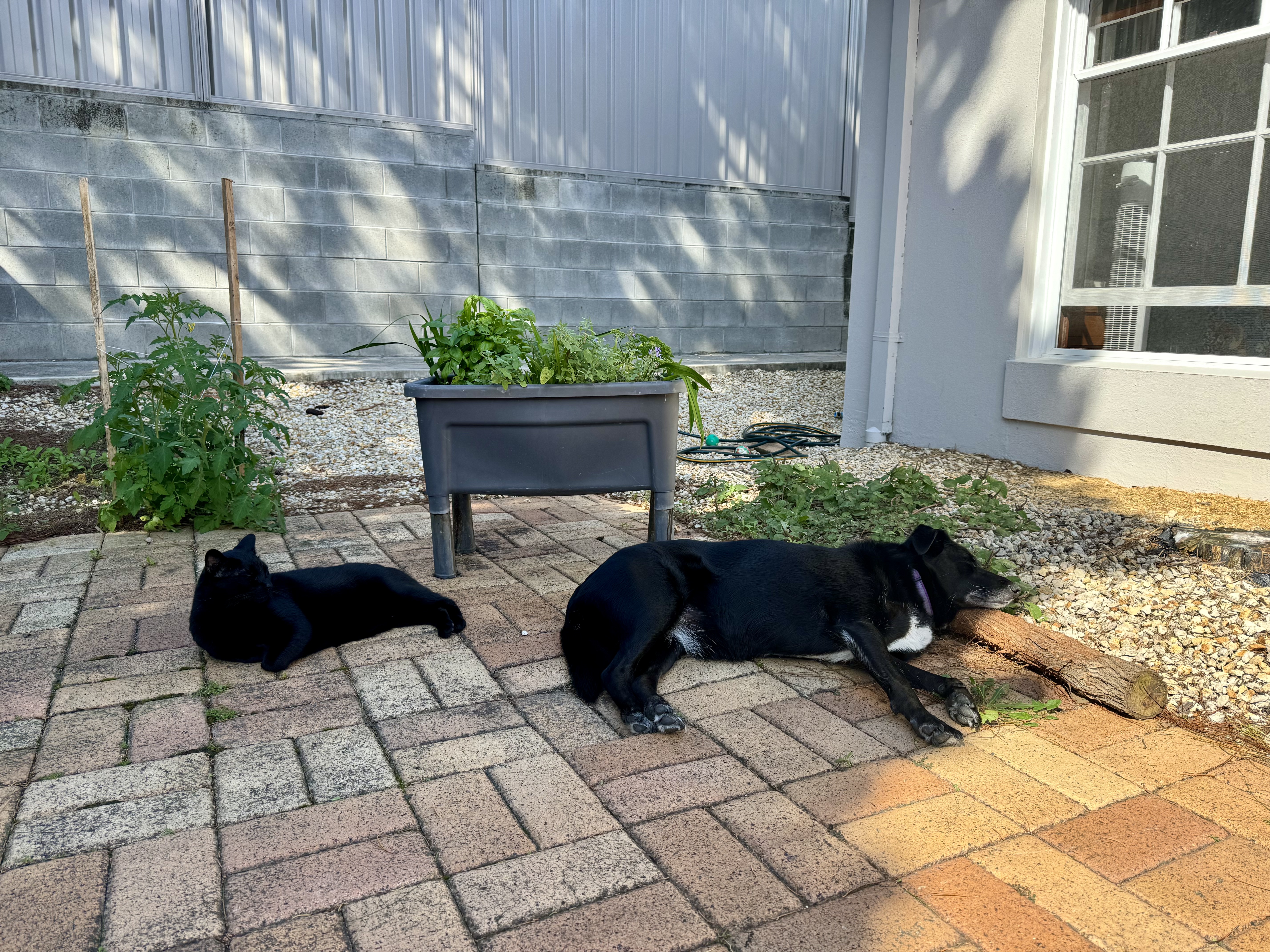
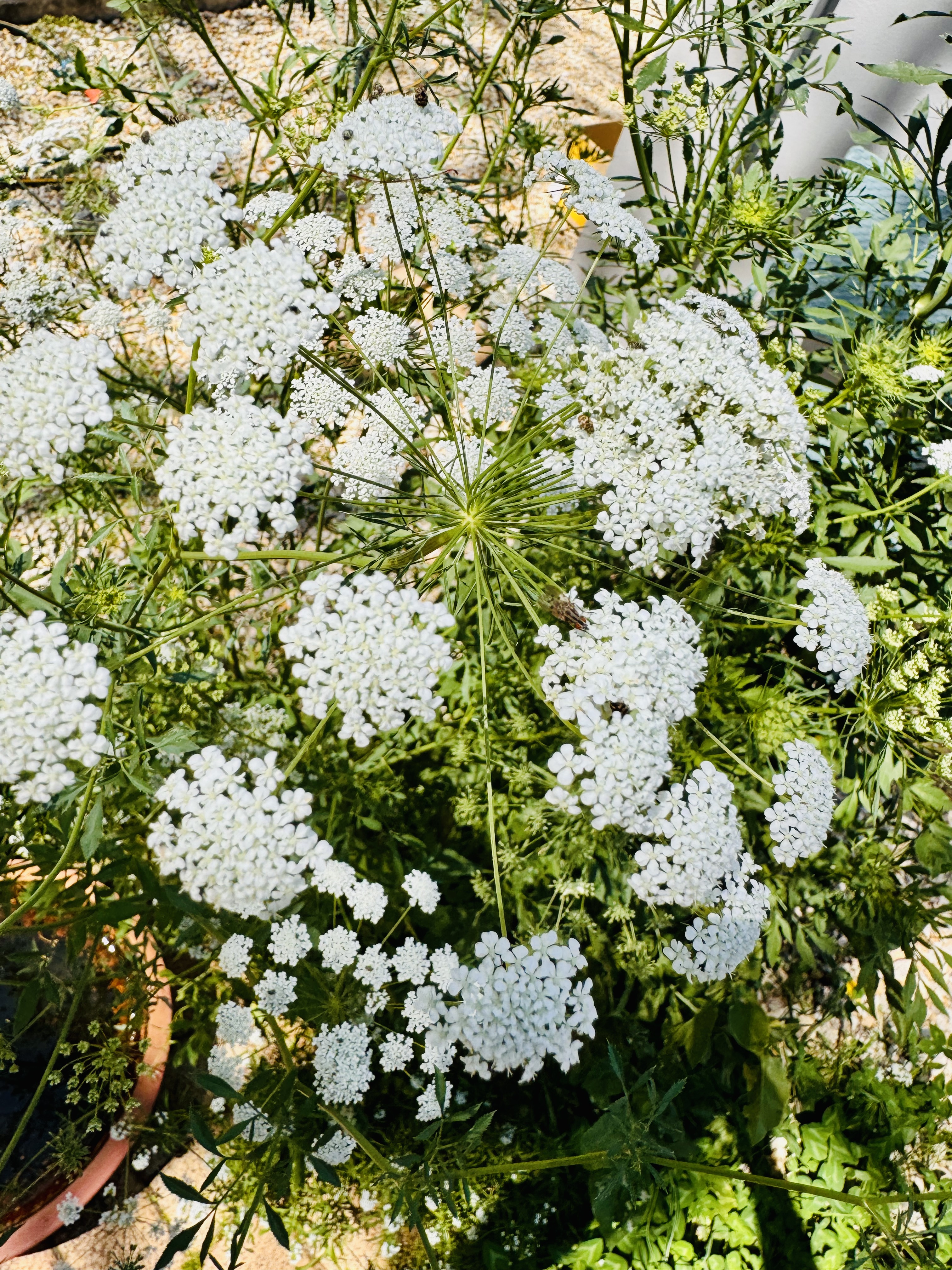
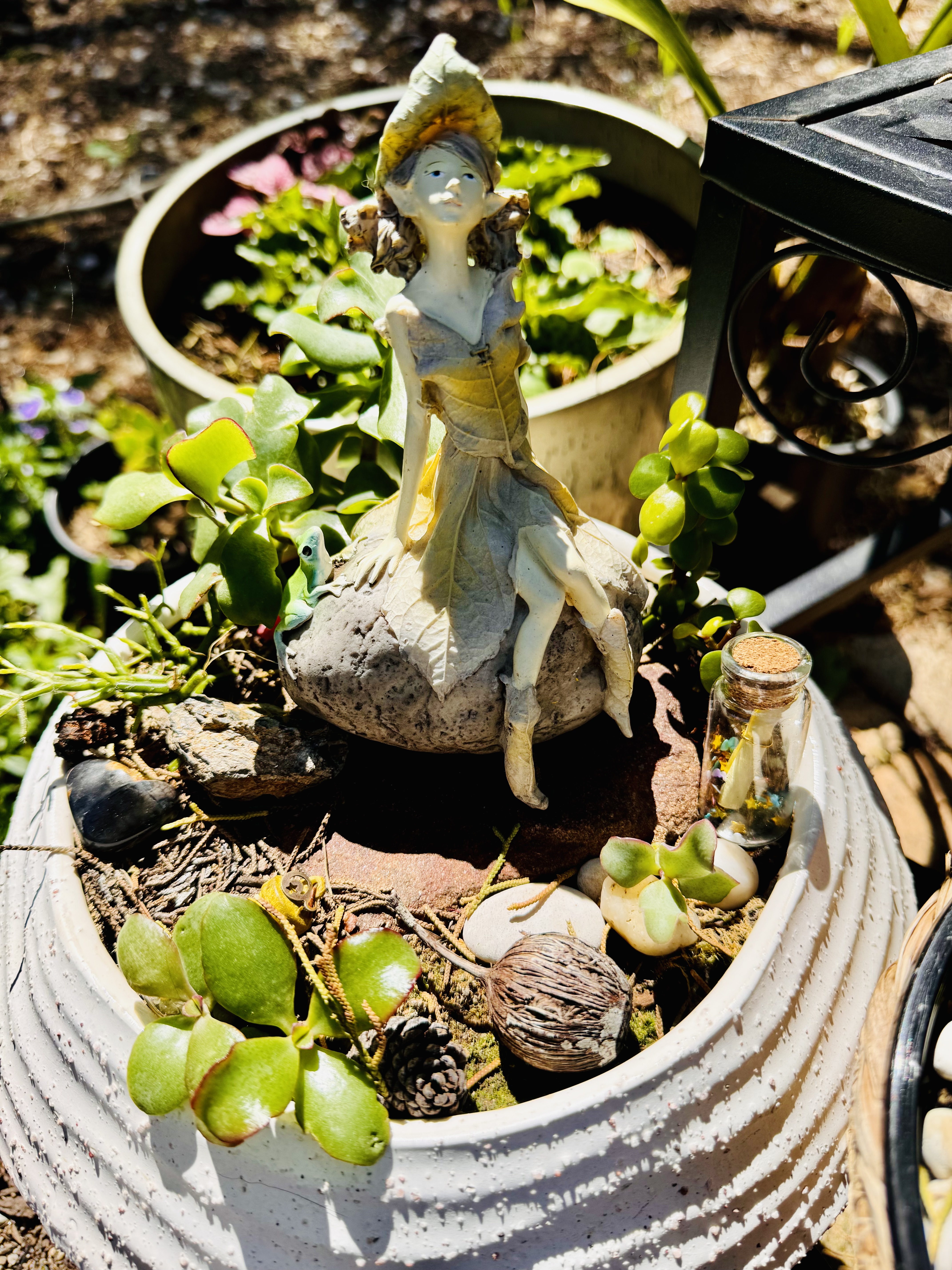
I watched Mom watching the sun – watching and waiting until, one day, she emptied a couple of seed packets among the stones and took to watering the pretty weeds. Friends and family began sending slips and cuttings of plants in unwanted pots. I received a three-tiered iron stand for my birthday, and Mom arranged and rearranged the collection through the changing seasons. We went to a market and stumbled upon four varieties of Saltbush which were planted with special care in honour of our team of Scattered Community Ministers.
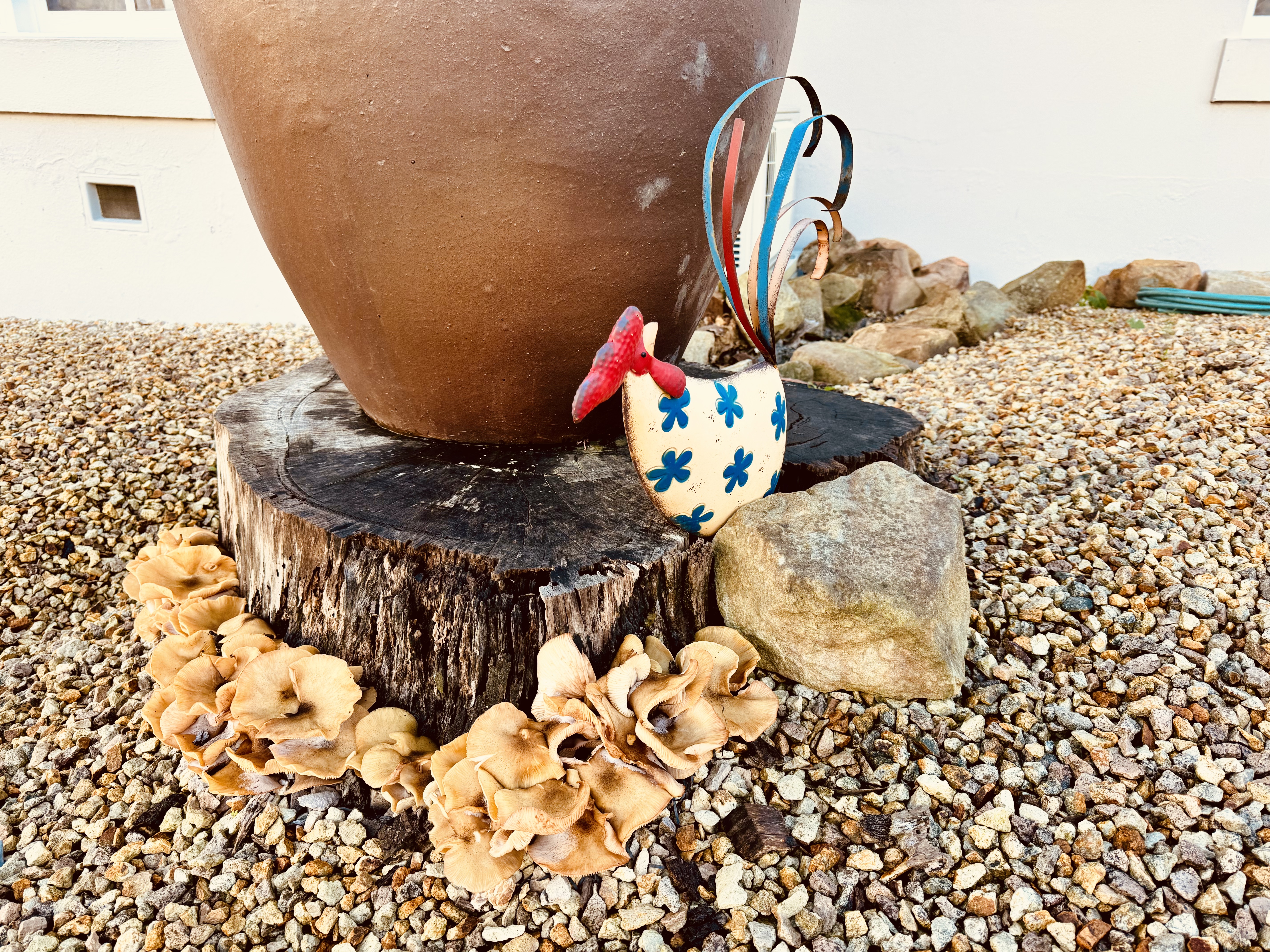
And slowly, so slowly, the barren wasteland of this space was transformed into a gathering place for kookaburras and black cockatoos, noisy miners, and koels, and pigeon pairs that always remind me of Triceratops. With the flowering of grass seeds, the sulphur-crested cockatoos arrived, eyeballing the cat who slept in his clover patch. Our cross-border collie-kelpie discovered how quickly time could be passed by watching fat lizards wriggle, and a little possum became a frequent night time visitor.
I couldn’t help but smile each time I walked through the back door, even though what emerged was not exactly pretty or expected by traditional standards. The whole place testifies to joy.

This joy that we celebrate at Advent is not a superficial or transient happiness that passes by the moment that the gifts are all opened, the meals have been eaten, and family and friends have headed back home. It’s far more than a feeling tied to external events that move us now up, now down until we don’t know who or where or why we are. It’s not a quick lift from the latest delight or the anticipation of something forthcoming but a deeper and abiding gift that is rooted in a promise, nourished by hope, and sustained by grace.
The joy described in Zephaniah 3:14-20 is not the joy of something that is already perfect but of something that is slowly being made new again:
“Sing, Daughter Zion; shout aloud, Israel!
Be glad and rejoice with all your heart, Daughter Jerusalem!”
(Zephaniah 3:14).
These words come to a people who had suffered, a people whose hearts had been heavy with loss and lives subject to oppression and violence. They’re surprising words from this young prophet, given that the vision before them is one of great and worldwide destruction – and anyone with an ounce of compassion might question his method and motives.
But Zephaniah sees through: through the desolation and despair that is a natural consequence of our destructive choices and practices to the profound and transformative power of God’s presence with us. At the heart of his message is the desire to see joy reorienting us within the bleakest circumstances to the world God is bringing near.
It is beyond frustrating that the time of renewal and restoration is not upon us yet, that God works so slowly, and that the changes we long for may never be realised in our generation. When will the proud and hostile fall? When will the humble and truthful be able to live in peace? When will those who have known shame and handicap and exile be held by the God in our midst? When will God just hurry up and “restore our fortunes” as Zephaniah promised?
In this season, it is too easy to look at the world around us and find it an inhospitable and unwelcoming place. It’s much easier to feel hopeless, anxious, frightened, frustrated than it is to sing out loud or find reasons to rejoice. Yet, my backyard and my life story has shown me what is possible in and with God when I don’t let my hands get weak because I find myself in an unhappy season.
So how might you cultivate a slow joy beyond Advent?
I hold onto the image in Zephaniah of God rejoicing over me with singing.
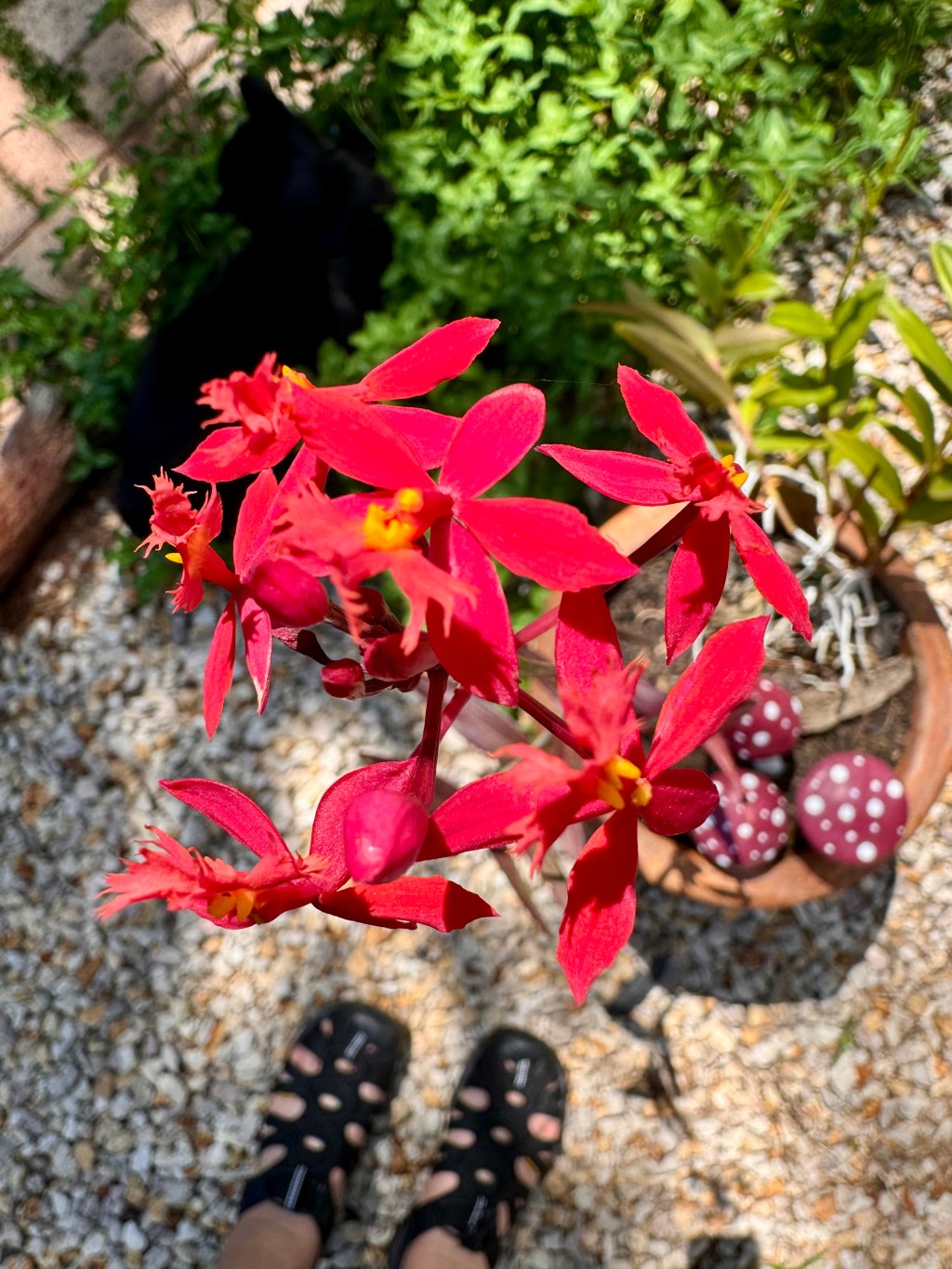
I strain to hear the notes of that song, to look among the bleakness for the small signs of life – like our first flower on the carefully tended Saltbush or the bright begonia that has planted itself firmly in a crack in the paving.
I say – sometimes out loud and sometimes as a barely-breathed prayer- “God is here” to remind me of the eternal on a particularly difficult day – or series of days.
I sit in places and with people who remind me that in the same way that a barren garden can, over time, become a sanctuary for life, our hearts, though often dry and weary, can be transformed through the slow, steady work of God.
I try to prioritise presence over perfection.
What might you practice to receive joy as God’s slow gift?
***
The prayer book that I use fairly regularly comes from a Celtic Christian community in Northumbria. I’d like to end with the words with which that book begins:
Where is joy?
As the hand is made for holding
and the eye for seeing,
you have fashioned us for joy.
Share with us the vision
that shall find it everywhere.
And when our song of joy
dies down to silence,
come hold our powerlessness with love.
Then shall our fear be gone
and our feet set on a radiant path.

 Liturgies 4life
Leave a reply to Philip G. Kerr Cancel reply