
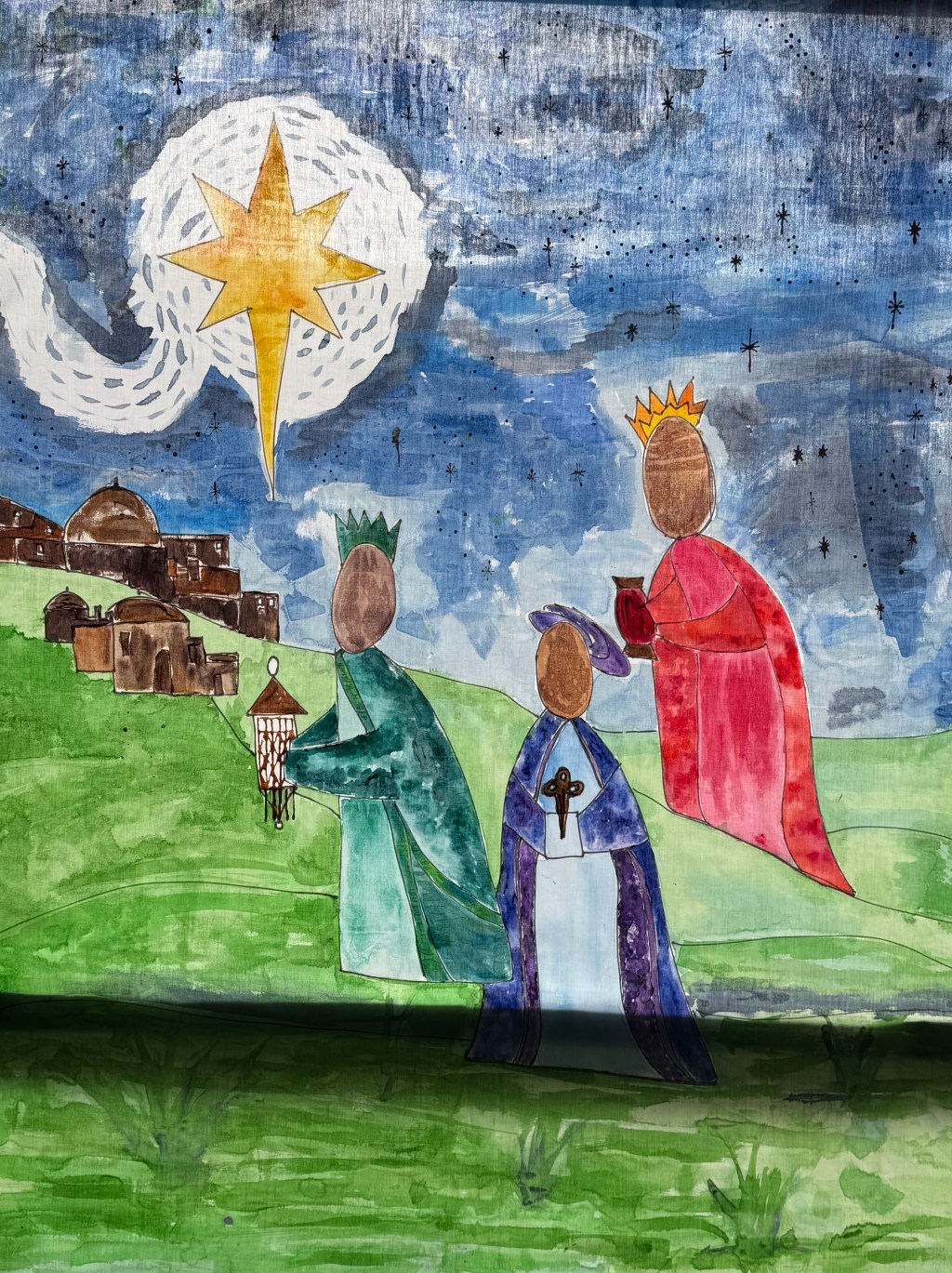
An Advent series based on the notions of simplicity, stability (a Benedictine vow), and sanctuary
Each week, congregants are offered a liturgy booklet that follows the same format and rituals, with elements like the poem/prayer, Bible reading, and wondering questions changing. The sermons are inspired by the “living stories” method and involve an unfolding visual scene that participants are able to interact with through wondering, touch, and silent reflection after.
Here is the liturgy booklet for week four, which focuses on Sages and Star-gazers and the theme “The Paths we Travel.”
I also want to note that following on from the atrocious shooting at Bondi Beach this week, we are integrating a Menorah lighting at the end of the poem prayer using a candle from a synagogue service for peace this week. There will also be the option to be anointed with frankincense.
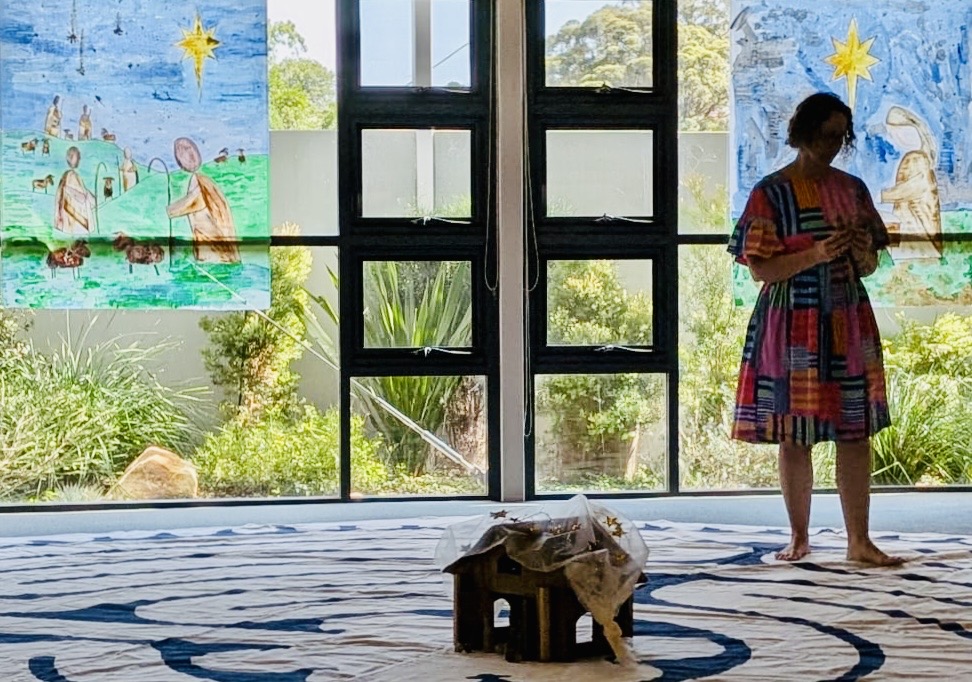
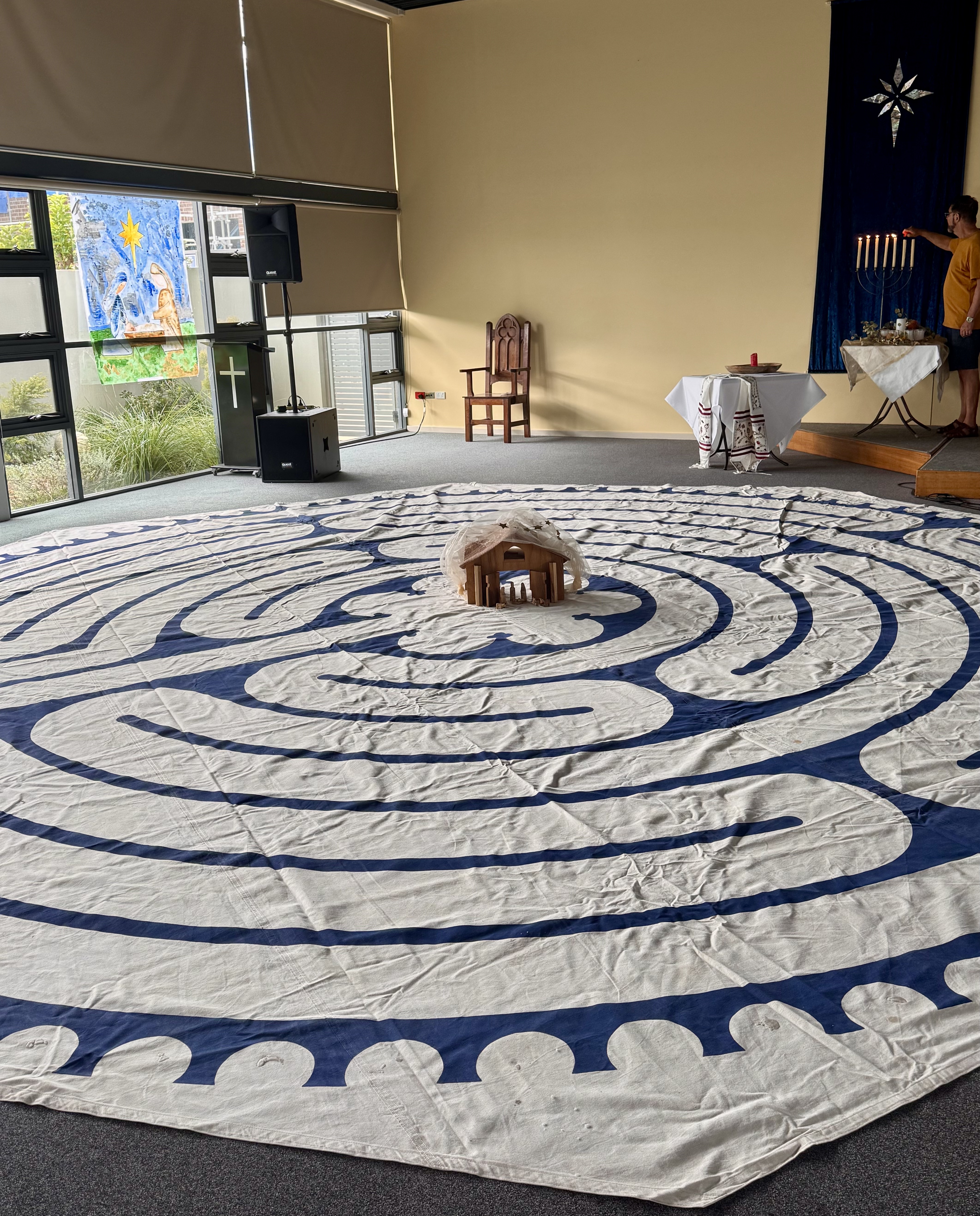
The text for the “living story sermon” is below with wondering questions in bold. People should be encouraged to respond or reflect together. For this week, we are laying a large labyrinth out in front of the communion table with the stable scene set. Three volunteers will walk the labyrinth – bearing gifts – as the story unfolds. I have also incorporated two songs by community groups – carol about Jesus being born in Bethelehem in Bari, and “the little drummer boy” by our local ukulele group.

“Listen to the story with your ears, your eyes, and your heart, and if you want to see or hear better, come close and help everyone to participate.”
Here is the stable around which a community will gather.
Here is Joseph from a line both noble and humble.
Here is Mary, a symbol of the openness of God’s story
to the unexpected and the overlooked.
Here is baby Jesus:
the light of God’s goodness enfleshed
where it is needed most –
in the darkness,
on the outskirts,
in a place of rejection and vulnerability.
Here are the shepherds
who would go anywhere to find a lost sheep –
into the grass, into the water,
even into places of great danger.
Here is the heavenly host singing a salvation song
that echoes through the cosmos:
Glory to God in the highest heaven,
and on earth, peace,
goodwill among people.
And here come the Magi—
(VOLUNTEERS ENTER THE LABYRINTH)
the sages and star-gazers,
whose hearts are set aflame by the wisdom of the ancients
whispered down through generations:
“Arise, shine; for your light has come,
and the glory of the Lord has risen upon you.”
They come from distant lands,
drawn by a celestial compass,
searchers of truth in a world filled with shadows,
wondering and wandering souls,
with precious gifts of gold, frankincense, and myrrh in their hands
to offer the King that they are sure they will find
at the end of their pilgrimage.
I wonder what stirs your heart to embark on a journey
toward the unknowns of Christmas and a new year.
These pilgrims in their sand-stained sandals
did not speak the language of Bethlehem,
nor honour the customs of its people,
nor suspect the discomfort that their arrival would cause
among Herod’s household
and, in fact, all of Jerusalem;
yet, God’s story has long unfolded on foreign tongues
and in footsteps across burbling rivers and shifting deserts
and through shadowy mountain passes.
How curious that those farthest from the centre
would feel such a strong call to the cradle’s edge.
Yet God has always gathered the outsiders:
Abraham gazing at foreign stars,
his obedience an entry into covenant;
Rahab hiding spies in her foreign home –
her thread of scarlet, a sign of salvation;
Ruth gleaning in foreign fields,
her loyalty, a strong branch in Jesus’s family tree;
Namaan dipping in foreign waters,
his complete healing, a testimony to God’s grace;
Nebuchadnezzar proclaiming the power of a foreign God,
his belief laying the foundation for rebuilding and restoration;
the Magi following a foreign star,
their homage, a herald that Christ is King of All.
Clara’s carol
And how tragically predictable it is
that those at the centre of power
feign interest and politeness
even as they close their hearts to the expansive love of God
and plot violence in their own self-interests.
I wonder how close to or far from God’s own heart
you feel in this moment.
This week, a labyrinth unfurls in our space
—a path for feet and hearts alike.
Each step into its winding turns,
is a little like the Magi’s journey.
Each curve echoes their questions,
each corner their searching.
The journey is not always straight,
nor is the destination always clear.
With one step you feel like you are almost there;
with the next, you wonder if you’ll ever make it.
But the invitation to draw near remains
and the Christ at the centre
who gathers us in and sends us out again and again and again
is the same.
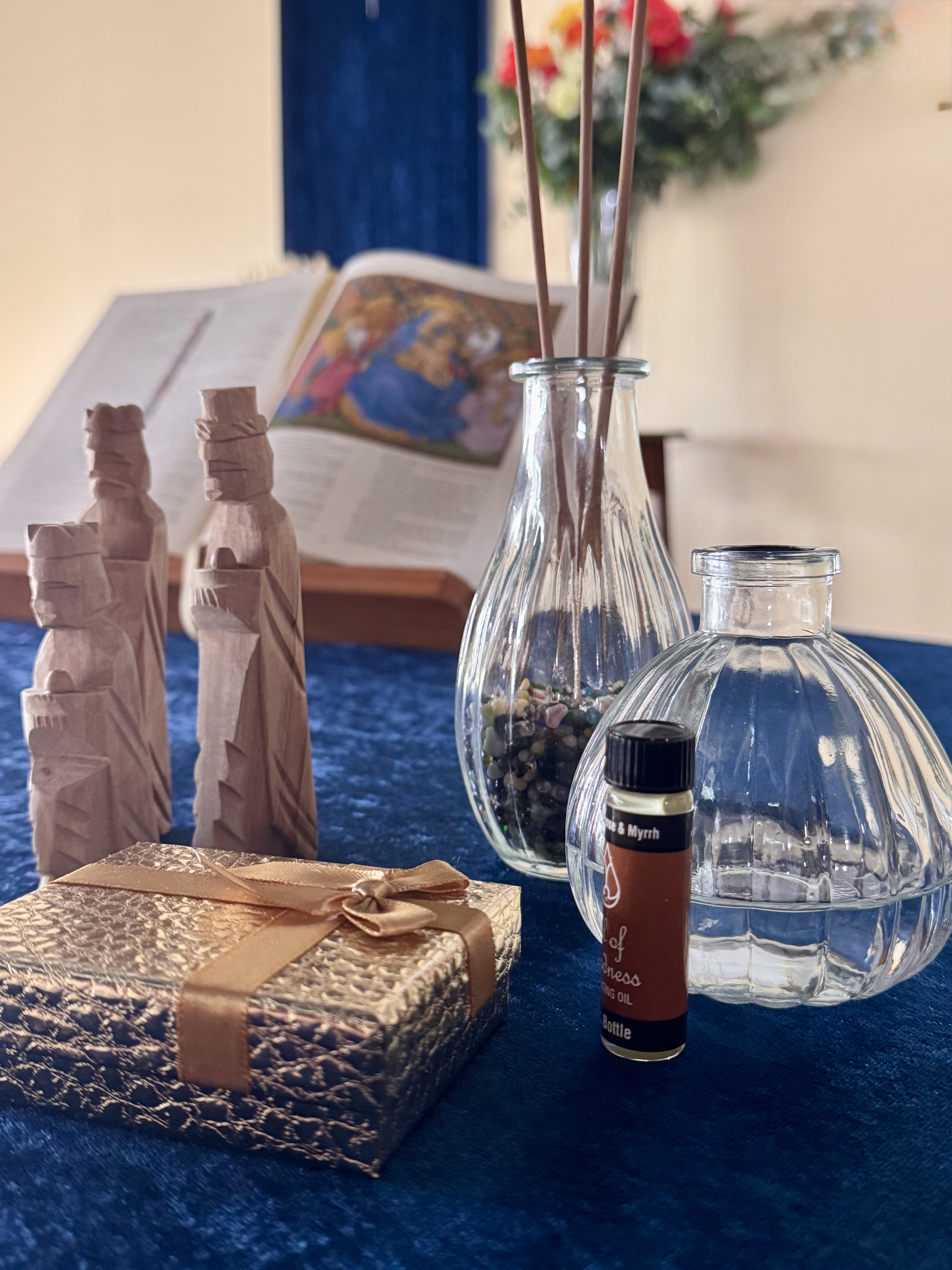
“You are the King of Kings,”
uttered the first Sage as he offered his gift of gold.
It glistened and gleamed in the stable’s dim light,
a royal tribute echoing ancient dreams—
a child crowned with heaven’s authority,
but cradled in humility.
The world’s wealth bows before One
whose reign is measured not in riches,
but in justice and love.
“You are the God of Heaven and Earth,”
the second seeker intoned as they presented frankincense.
Its scent, sweet and smoky, drifting upwards—
a fragrant prayer,
a token of divinity.
Here, God meets humankind,
and the lines between earth and eternity blur
in a small, beating heart
that invites us to sense the sacred in the ordinary.
“You are the Lamb who will suffer and save,”
the third star-gazer whispered as she laid myrrh at the child’s feet.
It was a heavy gift for one so young –
a foreshadowing of what would come:
a king destined for a cross,
a healer who knows sorrow,
women bearing spices and grief in the early morning
to a borrowed tomb.
Redemption is costly;
hope is born in the midst of pain.
I wonder which gift you would choose to carry
into the world this day.
Little drummer boy
The story ends as stories often do
with new journeys –
for the sage and star-seekers,
a return to the land from which they came
but not by the paths they had discovered
nor the roads they had mapped.
To thwart the evil in Herod’s heart,
they went home another way –
and were foreigners no more.
For Mary and Joseph and baby Jesus
the way of salvation,
now, ironically leads to Egypt:
the place where so many generations of their kin
had lived and died as slaves
until I AM WHO I AM led them into freedom and new life.
The King of Kings becomes a foreigner.
The God of heaven and earth is a wanderer.
The Lamb who will suffer and save was a refugee.
This week, a labyrinth unfurls in our space
—a path for feet and hearts alike.
Each step into its winding turns,
is a little like the life’s journey.
Each curve echoes our questions,
each corner our searching.
The journey is not always straight,
nor is the destination always clear.
With one step you feel like you are almost there;
with the next, you wonder if you’ll ever make it.
But the invitation to draw near remains
and the Christ at the centre
who gathers us in and sends us out again and again and again
is the same.
So touch the wooden figures.
Examine the gifts that were carried.
Stand for a while on a spot in the labyrinth
if you’d like to be anointed with frankincense.
As you engage with these symbols,
allow your imagination to wander alongside the Magi
and the holy family.
What new paths are unfolding before you?
May this story shape not just our understanding,
but our hearts and our actions—
settling our fears and sending us searching
for justice, the flourishing of life,
and the coming of Christ among us.
 Liturgies 4life
Leave a comment