
A "sermon" on The Lord's Prayer from Luke 11:1-13
If only it was that easy:
people giving good gifts to neighbours in need
and to their children according to their requests –
“For everyone who asks receives;
the one who seeks finds;
and to the one who knocks, the door will be opened.”
But much of growing up in life and faith seems to highlight the chasm between our understandings and expectations of prayer and our experience of the fragility and vulnerability of being human with other humans in families, communities, workplaces, politics, and, yes, even the Church.
Just yesterday, I stumbled upon a wondrous little quote from Viktor Frankl’s book “Man’s search for meaning” which, together with today’s artwork, of the open door helped me enter into the text with a slightly different sense and perspective.
“Between stimulus and response, there is a space. In that space is our power to choose our response. In our response lies our growth and our freedom.”
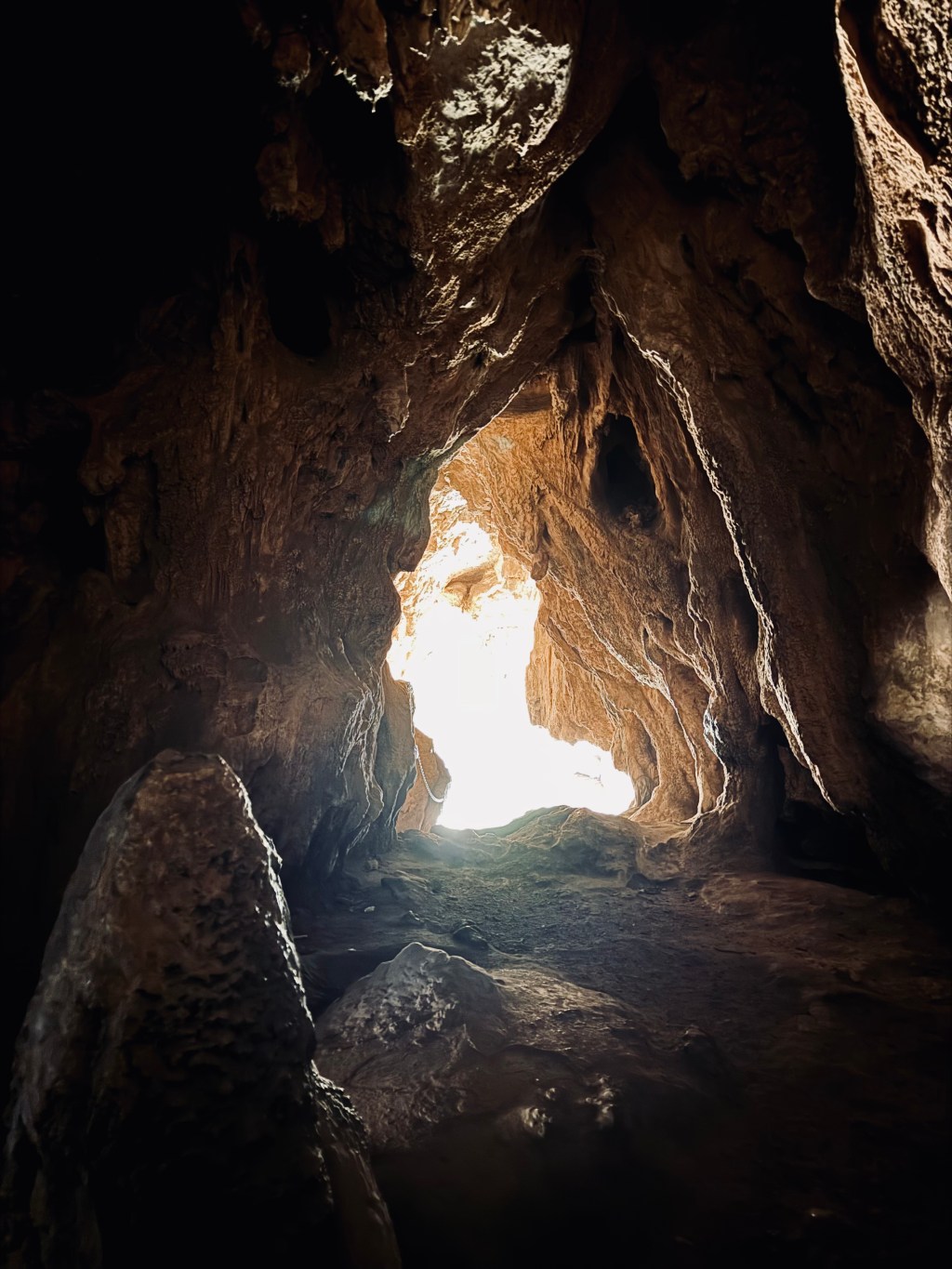
Maybe prayer is that space. That vulnerable meeting of dark and light in which we catch a glimpse of a potentially new landscape in our lives, in our faith, in our relationships, in the hopeless plight of starving children in Gaza or caring for an elderly parent with dementia or navigating the irrevocable loss of a loved one after a marriage that has lasted decades ….
This portion of Luke from the lectionary is, in itself, a transition space marking a movement from stories about being sent out on missions and loving neighbours and being good samaritans and choosing, like Mary, the better thing … to the struggles of driving out devils and dealing with unclean spirits and having to shine a light in a dark and doomed generations and arguing with the pharisees and lawyers about the wickedness of their hearts ….
In this space between the work of God’s kingdom—bounded by acts of compassion, justice, and spiritual battle—and the raw reality of human weakness and suffering, one of Jesus’s disciples asks him how to pray … as Jesus, himself, has been praying …..
And Jesus, in His gentle response, offers not a formula, but an invitation
—to approach the divine as a loving, caring parent who desires relationship more than rules, who welcomes our honesty and our vulnerability. He points beyond the outward expressions of faith, beyond the busy-ness of ministry, to the quiet, persistent act of seeking, asking, knocking.
There is still activity and intention in that ….
And if you’ve knocked on a door recently, you will know that there is always an element of expectation, of mystery, and maybe even of anxiety attached to the act
Is someone home?
Have they heard me?
Should I knock again?
Should I just stand here and wait?
Have I come at an inconvenient time?
When the door opens, who will greet me?
How will I be received?
What will I find in the space beyond?
A few months ago, as I was talking about an impending house move with my decidedly non-churchy personal trainer at the gym, he told me just how much it was going to suck because of the poor weather forecast. (We were in the midst of a ten day weather event resulted in some flooding in the area).
Without thinking properly about it, I replied that I had actually been talking to God about it that morning. Out came the phone in response. “I’m making a note of it in my diary. Let’s see if anyone’s actually listening to you ….”
I went home mortified because I don’t think that prayer works like that. I don’t think of God as a genie in a magic lamp who makes my wishes come true as a reward for turning my attention God’s way.
My prayer was an expression of my anxiety. A letting go of an unhelpful fretting about the future so I could get about doing the things that I can manage in the knowledge that I am seen and known and free. It was a welcome pause, a breath, a conversation.
But sure enough, the sun shone (feebly) on that one day … and I walked into the gym the next and was greeted with a arm-pumping shout which took everyone by surprise: “Jesus IS real!” And now it’s become a funny moment of testimony and of connection.
The act of prayer changed more than I had imagined, made space for unexpected conversation, helped people know me, helped me reflect on prayer, and is even shaping this space of reflection right now.
Yet, I’m not trying to teach you how to pray – because I don’t believe there is a one-size-fits all. I’m not even trying to answer the hard questions we sit with about asking and not receiving, knocking and finding a closed door,
But I am saying that maybe, just maybe, prayer is the space God holds between the light and the dark, the reality and the hope, the destructive reaction and the bringing-the-kingdom-of-God-in-which-every-tear-is-wiped-away-by-God’s-own-hand enactment.
I invite you, today, to hold on to the image of “the doorway “Doorway in Meissen” by renowned German Romantic landscape painter Caspar David Friedrich. He is celebrated for his evocative, symbolic landscapes that explore themes of spirituality, nature, and the divine by combining natural scenery with allegorical and contemplative elements. In particular, he pays careful detail to the contrast between light and shadow to invite viewers into a reflection on invitation and mystery and, often, what lies beyond a particular landscape.

May it symbolise for you in the week ahead a point of entry from the familiar world into a sacred or divine space, a bridge between our daily lives and God’s infinite presence.
 Liturgies 4life
Leave a comment